
LOST VEGAS: Bob Stupak’s Vegas World
Corey Levitan Read More
The Polish Maverick Behind Las Vegas’ Most Iconic Casino
Bob Stupak was one of Las Vegas’ most original — and successful — hustlers. His biggest and most-lasting impression on the city — and its skyline — was the creation of the Stratosphere Hotel and Casino (today, the Strat) on the north end of the Strip.
Only Bob Stupak could have opened the most overachieving casino in the history of Las Vegas 46 years ago this week.
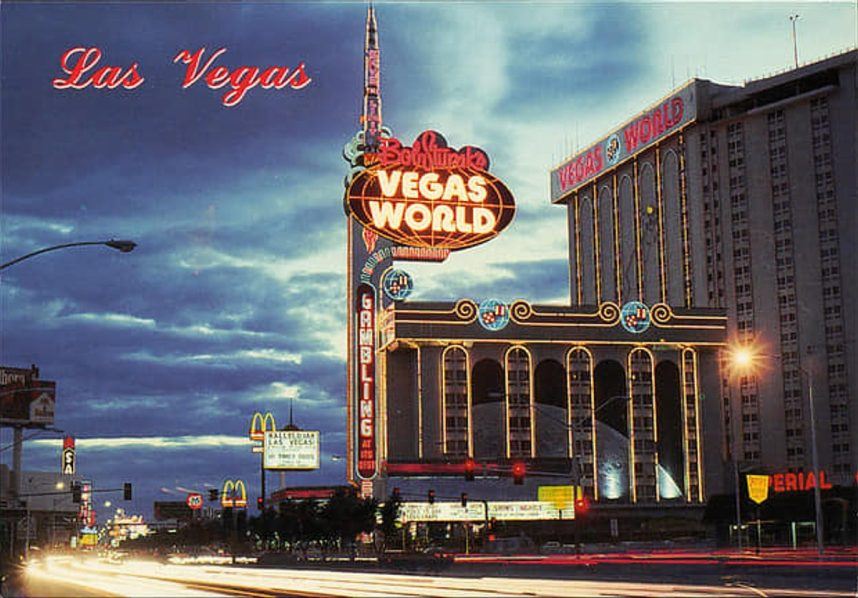
Vegas World appears in an undated 1980s postcard. (Image: UNLV Special Collections)
A Flair for the Dramatic
Dubbed “the Polish Maverick,” Stupak was the closest thing Las Vegas ever mustered to its own P.T. Barnum. The showman/hustler had a flair for the dramatic that would eventually reshape the city’s skyline.
The Interior of Vegas World
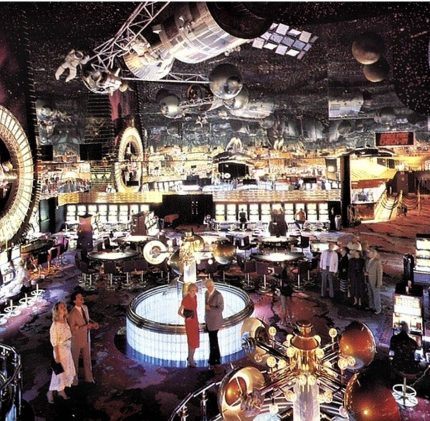
The interior of Vegas World featured a replica of a NASA Apollo capsule and a life-size dummy astronaut suspended from the casino ceiling. (Image: Felix Lenox)
A Gaudy Space Theme and a Phenomenal $100 Million a Year
Vegas World opened on a Friday the 13th in July 1979 with a gaudy space theme in an undesirable Las Vegas Boulevard location — north of the Strip but south of downtown. Thanks to creative promotions — including the world’s first million-dollar slot jackpot, unique table games like Double Exposure 21 and Crapless Craps, and near-impossible-value vacation deals — Stupak was able to generate a phenomenal $100 million a year in revenue.
Creative Promotions and Controversy
Those vacation deals — offering airfare, hotel, meals, show tickets, and gambling credits for as little as $99 — were mailed to millions of US households in a campaign that got Stupak fined $1 million by regulators for deceptive advertising. (The fine print obscured additional fees, restrictions, and the obligation to sit through hours-long sales presentations.)
A Hustler’s Journey
Born in Pittsburgh in 1942 to the owner of an illegal dice club, Stupak seemed destined to follow his father Chester’s unconventional path. Dropping out after eighth grade, young Bob pursued risky ventures that helped hone his huxterism.
From Card Games to Casinos
He ran illegal card games, sold watches door-to-door, and built a thriving business selling two-for-one coupon books.
“I never had a steady job,” Stupak once told the Las Vegas Review-Journal. “All the jobs I had were self-inflicted.”
A Vegas Journey Begins
For thrills, he raced motorcycles and sang in nightclubs (under the name Bobby Star).
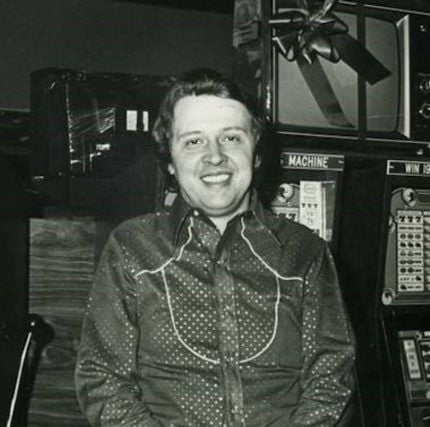
Stupak’s Vegas journey began in 1971, when he arrived with $300K that he gambled on a 1.5-acre plot on which the Cheateau Vegas stood. Stupak repurposed the restaurant into Bob Stupak’s World Famous Historic Gambling Museum in March 1974.
From Museum to Casino
Only two months later, the casino burned to the ground in a fire that investigators labeled “of suspicious origin.” Insurance companies filed a federal lawsuit alleging Stupak set the fire to collect “grossly overstated” losses, but the case settled without definitive evidence or a conviction.
Stupak used his $300K insurance settlement, along with a $1 million bank loan, to build Vegas World on the same plot.
Other Stupak-ery
Stupak’s other publicity gimmicks included donating $100K to the United Negro College Fund to shoot hoops with the Harlem Globetrotters, playing no-limit poker against a supercomputer for $500K on national TV, and placing what is believed to be the first million-dollar wager on a single sports event.
Stupak bet on the Cincinnati Bengals to cover a +7 point spread against the San Francisco 49ers in Super Bowl XXIII. Since the 49ers won by only 4 points, Stupak won and doubled his money.
The Stratosphere
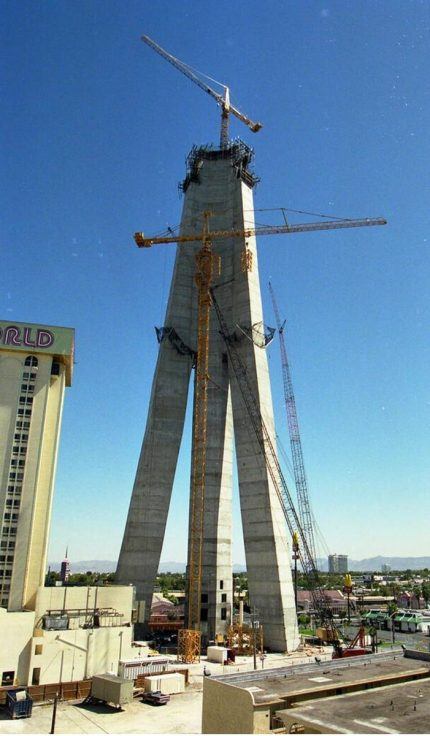
The Stratosphere is shown under construction in the early 90s at Vegas World. Note the Vegas World sign at left. (Image: Vintage Las Vegas)
A Towering Achievement
But the stunt that would have made P.T. Barnum proudest was transforming Vegas World into the Stratosphere (now the Strat). The conversion expanded the casino and added two hotel towers and what, at 1,149 feet, remains the tallest freestanding observation tower in the US.
The Stratosphere Tower was originally conceived of as a sturdier roadside sign than Vegas World’s original model, which was damaged in a 1991 windstorm. Inspired by landmarks like Sydney Tower and Seattle’s Space Needle — and by the then-new Mirage getting all of the public’s attention — Stupak decided to make it bigger and better.
To fund the $550 million construction cost, he brought in Grand Casinos Inc. as the majority investor in the Stratosphere Corporation. But when disappointing visitor traffic following the property’s April 1996 opening sent the company’s stock plummeting, the Stratosphere declared bankruptcy in 1997.
A Colorful Legacy
Stupak was ousted during the restructuring, reportedly losing nearly $200 million of his personal fortune.
Yet Stupak remained a colorful figure in Vegas — running for lieutenant governor, launching various new ventures, and staying active in the poker scene until he died in 2009, at 67, after battling leukemia.